
We move into the next section of our list where championships and longevity seem to be a common theme!
40
Kevin McHale:
McHale came out of the University of Minnesota as the league’s third pick in 1980 as a gangly 6’10” post with a plethora of crafty moves down low. Ultra-skilled and agile for his size, McHale helped the Boston Celtics capture three championships in the 1980’s. Starting out as an overqualified sixth man, McHale was a two-time Sixth Man of the Year winner before becoming a starter in 1985. A six-time All-Defensive selection, McHale showcased skills on both sides of the floor for one of the league’s best teams of all time. Playing second fiddle to Larry Bird may have taken away some of the counting stats for McHale, and a quick look at Basketball Reference might not paint the best picture of the talent he possessed. But the rings and legend speak more for themselves as time passes.
39
John Stockton:
Like many stars of the 90’s, Stockton falls in the shadows without a ring. But the all-time leader in steals and assists is the poster child for longevity and availability. Missing fewer than 25 games in his 19-year career, Stockton captured nine straight assist titles, two steal titles, and two NBA Finals appearances. Alongside Karl Malone, Stockton manufactured arguably the best pick-and-roll game the league has ever seen. Though Stockton had a long and flourishing career, the lack of being the best guy on his team and not winning a championship pushes him down against some of his point guard counterparts who will come later on this list. This Gonzaga legend was as gritty as they come and will most likely always grace the top of the all-time assist leaderboards.
38
Rick Barry:
Barry split time in the ABA and NBA but surely showed he was one of the league’s best players in the 1970’s. Leading the Warriors in 1975 to an NBA championship, Barry is most famous for that and two other things: his success at the free-throw line with his underhand (“granny”) styled shot, and for being a tough teammate in the locker room. Barry was never one to back down from a confrontation, but he was like that with his competition too. An extremely intelligent basketball player and a tough-as-nails competitor, coupled with his ability to score the basketball, make Barry one of the greatest players of his era and of all time.
37
Jason Kidd:
As the second pick in the 1994 NBA Draft, Kidd was a highly thought-of prospect with really only one hole in his game: his jump shot. One thing I admire about Kidd was his ability to develop his skill set throughout his career. For a player to be nicknamed “Ason Kidd” (because he was missing a “J”) and retire as a top-10 all-time three-point field goal maker is a real testament to him as a player. Kidd was clearly talented from the get-go but was tumultuous in Dallas, quickly being traded to Phoenix. Kidd’s career really took off when he arrived in New Jersey, where he led a clearly inferior Nets team to two Finals appearances. Kidd captured NBA glory in 2011 with the Mavericks and checked off just about every NBA accomplishment aside from a league MVP.
36
Steve Nash:
A two-time MVP and five-time assist leader in the NBA, Nash was one of the greatest floor generals in league history. Standing at 6’3” and 195 pounds, Nash was far from an intimidating physical specimen. Though quick, Nash became a great player almost six years into his NBA career as one of the craftiest passers and ball handlers the league has ever seen. A guy who, if he had played his career 10 years later, would have shot the ball a lot more, Nash is percentage-wise one of the greatest shooters of all time and is one of nine players ever to accomplish a 50-40-90 season—and the only player to do it three times (50% FG, 40% 3FG, 90% FT). Nash, like many in this section of the list, never won a title. Nash and the Suns made plenty of deep playoff runs, but in an era with Kobe Bryant and Tim Duncan in the West, Nash was never able to get over the hump. One thing I often reflect on with Nash is that he was teammates with Dirk Nowitzki in Dallas, and right before Nash really came into his own, he was essentially forced to sign with the Suns when Dallas signed Erick Dampier to a large contract. The what-if of Nash and Dirk together through the early 2000’s still stands as one of the biggest what-ifs in basketball.
35
Patrick Ewing:
Ewing came into the league as one of the highest-touted prospects out of Georgetown. A towering scowl bestowed upon the 7’0” Ewing, a three-time All-American and National Champion in college, the league’s #1 pick in 1985 had a miraculous career. Immediately showcasing his skills on both sides of the court, Ewing was a terrific shot blocker (career average 2.4 blocks per game while lingering in the league into his late 30’s) and scorer, averaging 21 points per game for his career and as much as 28.6 points per game in an era when points were harder to come by. Ewing never captured an NBA championship but led a consistently contending Knicks team that captured the eyes and hearts of New York in the 90’s.
34
Bob Pettit:
Pettit is another great whose scoring and rebounding numbers jump off the page. After being selected number two overall out of LSU, Pettit won Rookie of the Year and, the following season, captured the league MVP. Leading his St. Louis Hawks to the 1958 crown, there isn’t much missing from Pettit’s legacy. A career average of 26.4 points and 16.2 rebounds made Pettit the league’s first truly great power forward.
33
James Harden:
A real case could be made that James Harden is the best offensive guard of all time. An 11-time All-Star and 8-time All-NBA member, Harden has also captured three scoring titles, two assist titles, and a league MVP (plus two second-place and two third-place finishes). Harden is and was a gifted slasher who relentlessly tormented teams in the pick-and-roll. Go under the screen, and he’ll splash a three. Go over the screen, and he’s going downhill for a layup or a kick-out three. There was nearly a decade where there was no stopping James Harden offensively. The knock on Harden comes by way of being a lackadaisical defender and not being able to come up big in large playoff moments. While still playing on a competitive Clippers team, Harden seems stuck in this section of all-time lists unless he can capture that elusive title.
32
Elgin Baylor:
Along with the greats of Wilt, Russell, and Oscar, Elgin brought an unprecedented amount of athleticism to the NBA. With a career average of 27.4 PPG without the three-point line, Elgin is one of the league’s best scorers of all time. Like many players of the 60’s, he is ringless and unfortunately called it quits mid-season in 1971–72 before his Lakers grabbed a title. Elgin was really the first slashing wing to carry that level of athleticism in the league. An 11-time All-Star and 10-time All-NBA member cement him as one of the greats despite playing in the era that he did.
31
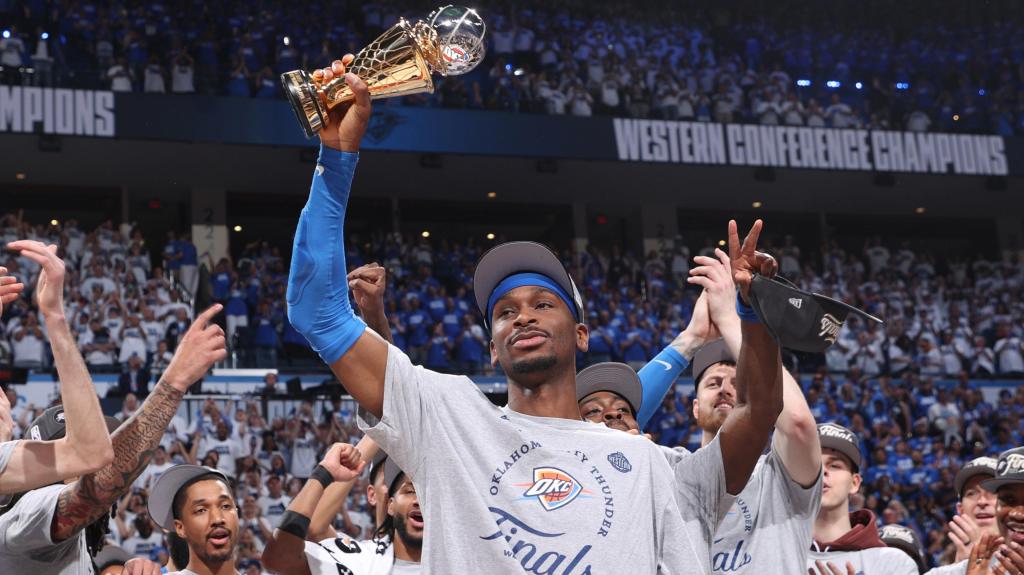
Shai Gilgeous-Alexander
Was Shai Gilgeous-Alexander’s 2024–25 season one of the greatest guard seasons ever? Yes. Does that one season alone catapult him into the top 50? For me, also yes. At just 26 years old and seven seasons in the league, Shai has captured a championship, Finals MVP, Regular Season MVP, three All-Star games, and three First Team All-NBA selections. He and the Thunder look far from finished on this run. There is, of course, some projection you have to give when a guy has another 5–8 years of his prime left, but his ability to score the basketball as a guard and lead an extremely young team to a championship is something only a few guards in league history have ever been able to do.
 PostScript Sports
Leave a comment